

Chlorosis in plants is when the leaves turn yellow, but the veins may remain green. All the experts tell you it is due to an iron deficiency – but this is not true for plants in the Southwest USA.
Urban Myth
Yellow leaves, also called chlorosis, is a simple thing to treat in the Southwest but the myths on cause and treatment are still crawling all over the interweb. Myths that waste your money. Myths that do not fix the problem.

“It’s iron chlorosis” they tell you. “Add chelated iron” they tell you. When that doesn’t quite work, “Try chelated sulphur,” they tell you. This is an incorrect diagnosis and incorrect treatments for the Southwest.
I write books. And I publish articles. I even lecture to garden clubs. May I remind you, it is Dr. Soule. I do study plants. Sadly, the “chlorosis is lack of iron” myth is a persistent myth. How to correctly treat the problem in the Southwest comes with it’s own set of myths as well. Today I will tell you the cause, and give you four simple and inexpensive ways to solve the problem.
Chlorosis Defined
Yellowing of the leaves is called chlorosis because the chlorophyll molecules (chloro) in the leaves are losing their green pigment, as well as their ability to do their job and make food for the plant. In simple terms the plant is shipping the green to new leaves (the baby leaves) because they need it more than the older leaves. (Women and children get the “lifeboats” first – it is how plants behave.)

The Real Cause of Southwest Chlorosis
Now here I have to back up a tad and say that yes, lack of iron inside the leaves is the cause of the chlorotic leaves – but it is not because the soil lacks iron. The soil doesn’t lack iron, and does not need iron treatment. The soils in the Southwest have ample iron. The soils in the Southwest have iron in excess. Don’t believe me – run a magnet through your soil. You will get iron filings. (see * Science Nerd below)
Chlorosis in leaves is because non-native plants can’t absorb iron out of alkaline Southwest soil. Note that non-native. I have been at this for decades and have yet to see chlorosis in a healthy native plant that is watered correctly. So, on one level it’s lack of iron, but not really. It’s inability to absorb iron out of the soil. There is no reason to add iron to the soil.

The true name should be alkaline induced iron chlorosis. The chlorotic conditions are caused by the alkalinity of the soil. The treatment is acidifying the soil, not adding iron.
Alkaline versus Acid – Refresher
Soil, water, plants, people – indeed everything on earth – has a pH to it. The pH is a measure of how acidic or alkaline something is. Alkaline is also called “basic.”
Right in the middle between the two is “neutral.” Just to confuse people, chemists made neutral equal to 7.
     Alkaline (basic)  is greater than 7.0.
     Acid is less than 7.0.

Acid isn't bad. Virtually all the foods we eat are acidic. Apples and spinach are acidic.

Alkaline isn't bad. Coconut and avocados can occasionally be alkaline.
For this post, you don’t need to worry about the pH numbers all that much – just know that most plants grow better with a pH around 6.5 – slightly acidic. Some plants have adapted to alkaline conditions (native Southwestern plants) but virtually all of them grow better when the soils are made at least slightly more acidic. It’s one of the many reasons baby saguaros grow in the nice rich soil under nurse plants.
Chlorosis Treatment
Here are four ways to treat iron chlorosis in the Southwest – sorted by cost. Most of them are already in your home – in your kitchen in fact!

Coffee Grounds
 Collect used coffee grounds and sprinkle them around the plant you wish to help. Water these into the soil help and they will help acidify the soil. Many coffee shops give used coffee grounds away for free.
Note – do not use this treatment on soils where you will plant seeds. There is a compound in the coffee which retards seed germination. If you compost the coffee grounds first, then you can use them where you want to plant seeds.
Vinegar
White vinegar is inexpensive by the gallon – but don’t use it straight! Put one cup of white vinegar in four gallons of water. Use this to water the soil around the afflicted plant (not the leaves). Two to three treatments usually do the trick.
Horticultural Vinegar is now found in some stores. You can buy it but know that it is at least twice as strong. Dilute before use! Also, it is acid. You can get a chemical burn.
Compost for Long Term Treatment
 Compost is decayed plant matter. You can make your own compost. Or you can buy it. It is generally acidic – especially if you buy it in sacks from a non-Southwest supplier.
Compost, regularly applied as a mulch, helps acidify the soil and prevents recurrence. In a way, the coffee grounds mentioned above can be considered “raw” compost. Composted compost is better in the long run.
Soil Acidifiers
There are commercial soil acidifiers. Indeed, chelated sulfur can acidify soils. Copper mine waste products tend to be acidic and are also sold to treat chlorosis.
The Muriatic Acid Myth. Muriatic acid is a pool chemical. It is a very strong and highly caustic acid. You can easily get a chemical burn, or lose an eye if you dilute it incorrectly. I am not using it. The other reason I will not use it is that chemically it is hydrogen chloride. Chloride is not good for plants.

Repeat the Treat
Sorry to tell you, but you will have to repeat any chlorosis treatment every so often. Southwest soils are alkaline. Our water is alkaline. This means that, over time, and as plant roots are watered and grow, they will run into soil alkalinity all over again. The simple solution is to plant native plants and water correctly. This advice is from the lady with roses and citrus trees that require twice a year chlorosis treatments. If it is a living being held captive in our garden, then we owe it to them to give them proper care.
 Science Nerd & Iron Soils
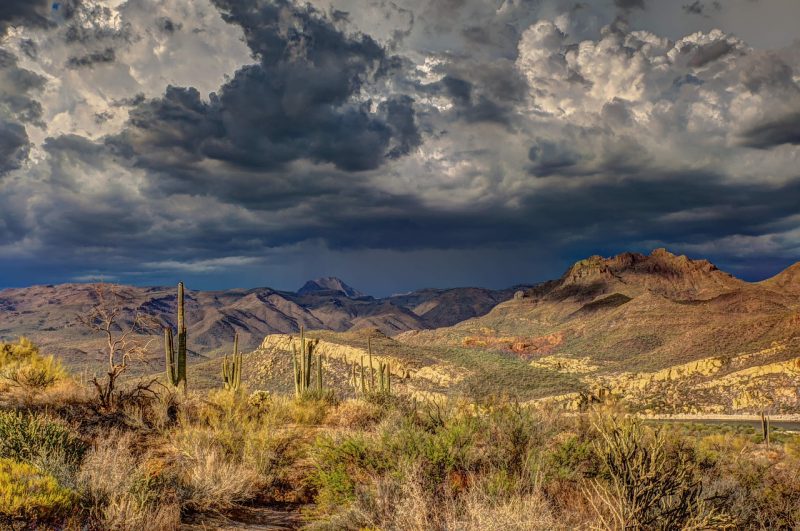
*Yes, I am a science nerd. I am always testing reality and checking my assumptions. I have taken a magnet to soils across the Southwest. Run it through the soil and always get some iron filings. Done it in town and outside town and in these general vicinities. Las Vegas, Elko, St George, Pariah, Bullhead City, Kingman, Yuma, Grand Canyon, 16 places around the Phoenix valley, all around the Tucson valley, at the Boyce Thompson Arboretum, Showlow, Bisbee.
The list goes eastward – Las Crusas, Taos, Santa Fe, Aztec, Durango, Fort Lewis, El Paso, Guadalupe Mountains, Big Bend, and Palo Duro Canyon. Most famously (to me at least) was checking the soil outside the Los Alamos Laboratory when on a tour with a university class. Two gentlemen in dark suits and shiny black shoes showed up and asked me to come with them. The magnet was confiscated and there was a formal statement, fingerprints, plus photographs of me, and my drivers license.
Yes. All these soils have iron.
Science Nerd & Other Causes of Chlorosis
Ninety nine times out of one hundred, the chlorosis in urban landscapes is due to alkaline soils. Then every so often, there is another issue. Chlorosis can also be caused by these other issues. It is so rare though, so let’s treat the most common issue first.
Magnesium or zinc deficiency. There is a different quality to the way the leaves turn yellow, and they generally curl as well. If the four treatments listed in this article don’t work, then try some Epsom salts (magnesium sulfate).
Excessive watering resulting in drainage and washing of all nutrients below the root zone. Seen in sandy soils.
Poor drainage and waterlogged roots due to clay soils or a “caliche bathtub.”
Exposure to sulphur dioxide is rarely an issue in the Southwest, but is is occasionally used as a pesticide and will harm plants as well. It’s why I avoid the “chelated sulfur” treatment. Chelation just means “bound.” Bindings can become undone.
Damaged and/or compacted roots, generally seen in recent plantings or construction areas.
Human error. Herbicides cause chlorosis, that’s their job. Extreme chlorosis and death. Occasionally pesticides like termite sprays can also cause chlorosis in plants. It’s why I urge people to avoid planting around the foundations of their homes in the Southwest.
Ozone. If it’s a house plant and you have been using an ozone generator for some reason – ozone injury is why you have chlorosis.
Pathogens. There are a number of bacteria and fungi that thrive in agricultural conditions and kill plants. The farmer sees a chlorotic plant but in reality it is a sick, dying plant.

Thanks for reading!
Jacqueline
More Tips – pages of them!
The Month By Month Guide offers tips for your landscape (yes even lawns and roses) in every month of the year. I have a few copies left and am offering them to you – my loyal readers. When you buy from me you get a signed copy!
From the review:
“A great reference book is key to successful gardening in the region where you live. Arizona, Nevada & New Mexico Month-by-Month Gardening takes the guesswork out of gardening for anyone residing in the Southwest. With this book, you’ll know what to do each month to enjoy a thriving garden all year, from January to December. Chronologically organized, this guide is full of critical gardening when-to and how-to advice, along with illustrated step-by-step instructions.
The book’s author is Jacqueline Soule, a Tucson-based gardening expert. She knows this arid region inside and out, and she’s written several articles and books packed with her gardening advice. Arizona, Nevada & New Mexico Month-by-Month Gardening showcases Soule’s expertise in one easy-to-read guide.”
Profits from the sale of this book go to the Horticulture Therapy non-profit Tierra del Sol Institute.
Legal Notes
© Article copyright Jacqueline A. Soule // Gardening With Soule. All rights reserved. You must ask permission to republish an entire blog post or article. Okay to use a short excerpt but you must give proper credit. You must include a link back to the original post on our site. No stealing photos.
Disclaimer
The authors of this website have researched the edibility of the materials we discuss, however, humans and our domestic animals vary in their ability to tolerate different foods, drinks, and herbs. Individuals using flowers, plants, animals, or derivatives mentioned in this blog and on this site do so entirely at their own risk. The authors on this site cannot be held responsible for any adverse reaction. In case of doubt please consult your medical practitioner.


Be the first to reply