

There are many ways to define an edible landscape. I could write a book about having your yard to look lovely, grow food, and be a low-water and a low-maintenance space. Oh wait. I have. It’s called Father Kino’s Herbs: Growing & Using Them Today. [The book is available on my book selling site – and if you buy the book there the Horticulture Therapy non-profit Tierra del Sol Institute will get a few pennies – at no extra cost to you.]
So many herbs look lovely in the landscape, are low water, and can help make life more tasty, thus fitting the definition of an “edible landscape.”

Beautiful Bay Laurel
With Christmas coming let’s start with a pretty little evergreen that you could use to decorate indoors, then later move outdoors. Key word here is little. Given about 100 years it will grow tall, but it stays small for a long time.
True bay laurel (Laurus nobilis) is the source of bay leaves – and a beautiful small evergreen tree. Slow growing, it is good for small yards, or even containers. Protect from frost when young. The leaves are best dried before using. Leaves can be harvested any time but are best in spring.
Be sure you buy true bay laurel. Landscape plants sold as “laurel” may be Prunus laurocerasus, also called the English or cherry laurel; a member of the rose family.
Other (more traditional) evergreens for living Christmas trees.
Tasty Garlic Chives
Garlic chives (Allium tuberosum) have narrow, bright green edible leaves. The cover image at the top shows how beautiful the plants are.
Cut a few leaves of garlic chives any time for salads, egg dishes, or anywhere you want a mild garlic flavor. This is a very versatile herb, and a good way to get some greens in the winter months. The globes of tiny white flowers are also edible, but a good nectar source for bees. Looking like a short, skinny day-lily plant, garlic chives adds a waterfall of green to any low-water landscape.
My YouTube of bees enjoying the garlic chive flowers – taken about this time of year.

Society Garlic
Society garlic (Tulbaghia violacea) got its name because you can eat the leaves and still go out in polite society. Available with leaves either lime-green or variegated with green banded with white. The purple flowers are edible and add a splash of color to salads. Plants look like a lot like garlic chives, but are originally from South Africa, not Asia. This plant does best with some afternoon shade in our climate, but also does not take freezing well (South Africa after all – no freezing).
Gorgeous Garlic

I know this is not the best option – but garlic from the grocery store is a perennial with iris-like leaves. Plant the clove in your flower bed or planter in January or February. Dig up a whole cluster of garlic cloves about six months later, as the leaves begin to die back. This is more fun for young kids to grow than seeds because these are hard to over- or under- water.
You can also do this with supermarket onions that have sprouted – but they will not form bulbs. Just grow them for the green leaves – and cool flowers.
More on growing onions.

Hoary Horehound
Horehound (Marrubium vulgare) is a beautiful low growing low water perennial with grayish leaves that are covered with soft, dense, velvety white hairs. The plant is named for this feature – because the leaves look like hoar frost. The hoary leaves help reflect sunlight as well and help them survive the summer.
I dry the leaves for horehound tea and drink it and make the old fashioned horehound candy from it. My dad loved that candy. Plants do well with a little extra water during drought. Use it like dusty miller in the landscape. Not so good in Low Desert but fine in cooler elevations.

Oregano and Kin
Both oregano and marjoram sister species – and part of what I call Herculean Herbs. Oregano is (Origanum vulgare) while marjoram is (Origanum majorana). Both make an excellent ground cover in the Desert elevations, especially between the stones of a flagstone path. Your nostrils will be filled with the scent of oregano as you use the path. Or cut some and toss it in your next pot of spaghetti sauce. (You might want to give the path ones a good wash.)
Many More Edibles
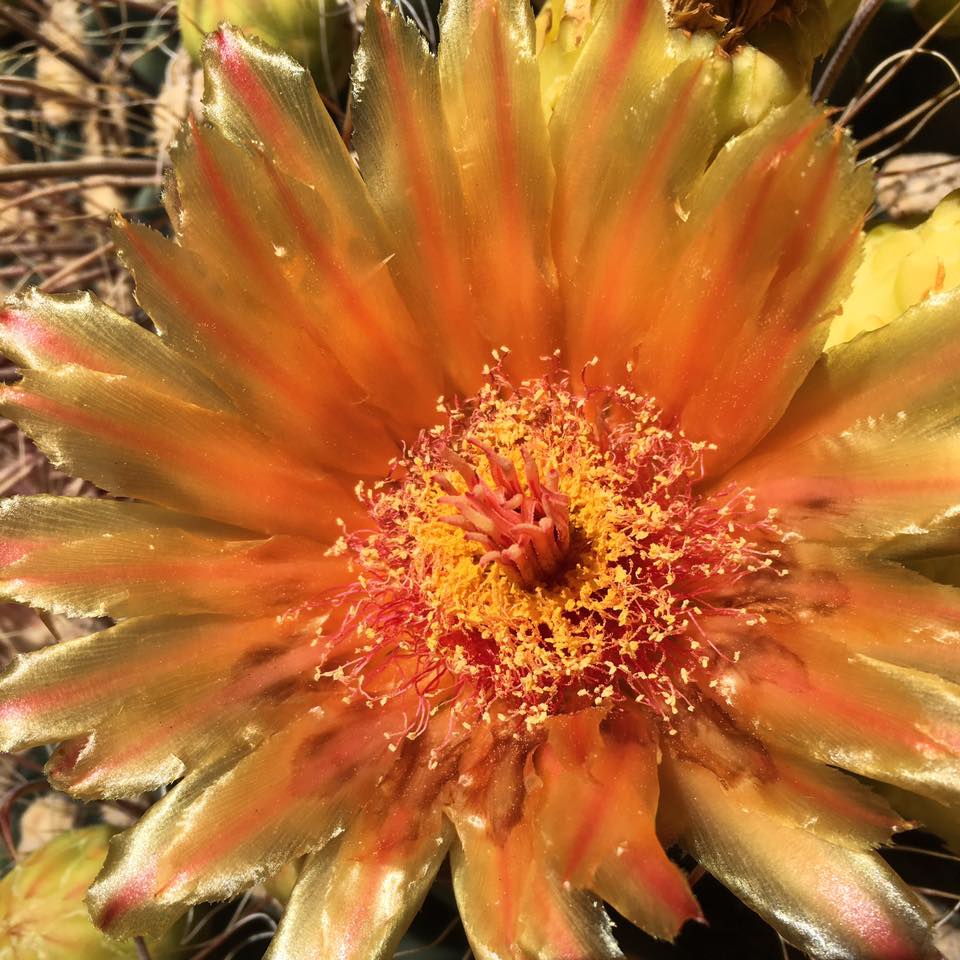
When it comes to edible, let’s not forget our local desert plants, like the yuccas. Native peoples have been using the flowers and fruit of the banana yucca for several millennia. Cactus fruit, like that of the saguaro and prickly pear, are sweet and delicious inside. Scoop out and enjoy the seeds and pulp, discard the outer rind. Several varieties of night-blooming cactus have large edible fruits too. The watermelon-like pulp is refreshing. Even the seeds of barrel cactus can be enjoyed. Indeed, they are the easiest to process because they are plentiful and have no spines!
I have not even approached the subject of edible flowers from the landscape. Ocotillo flower tea is excellent, for example. For more on edible flowers, may I suggest my sister site – Savor the Southwest

Legal
© Article copyright Dr. Jacqueline A. Soule. All rights reserved. You must ask permission to republish an entire blog post or article. Okay to use a short excerpt but you must give proper credit. You must include a link to the original post on our site. No stealing photos.


I love this definition of edible landscape! I too have an edible landscape!
It is all a matter of perspective!