

Do insects “bug” you? Some insects do indeed bother me (mosquitoes for example), but by and large, I am very thankful for their existence on this earth. Let me share why most bugs are good bugs, and we will also look at your top 6 insect friends.
 Interjection from the Pedantic Word/Science Nerd
The people that study insects (Entomologists) have an order of “true bugs,” the Hemiptera. Then they have a slew of other orders, including beetles (Coleoptera), butterflies (Lepidoptera), flies (Diptera), and so many more.
In this article I will use the word “bug” in the common meaning of “an insect.”
The “One-Percenters”
While it is true that there are some bad bugs out there, there are even more kinds of good bugs doing their part to keep the bad bugs in check. This depends if you consider “bad” bugs to be pests, the insects not beneficial to humans. The ratio is considered to be 99 percent “good” bugs, to 1 percent pests.

If you are into motorcycles, you may have heard about the “One Percenters.” It’s the one percent of all riders that belong to gangs, engage in illegal and nefarious acts, and give the rest of the peaceful, law abiding motorcycle riders a bad name. Same thing in the insect world. Those One Percenter bugs have given the entire group a bad name. Please note that not all motorcycle clubs are gangs, no matter how rough some members may appear.
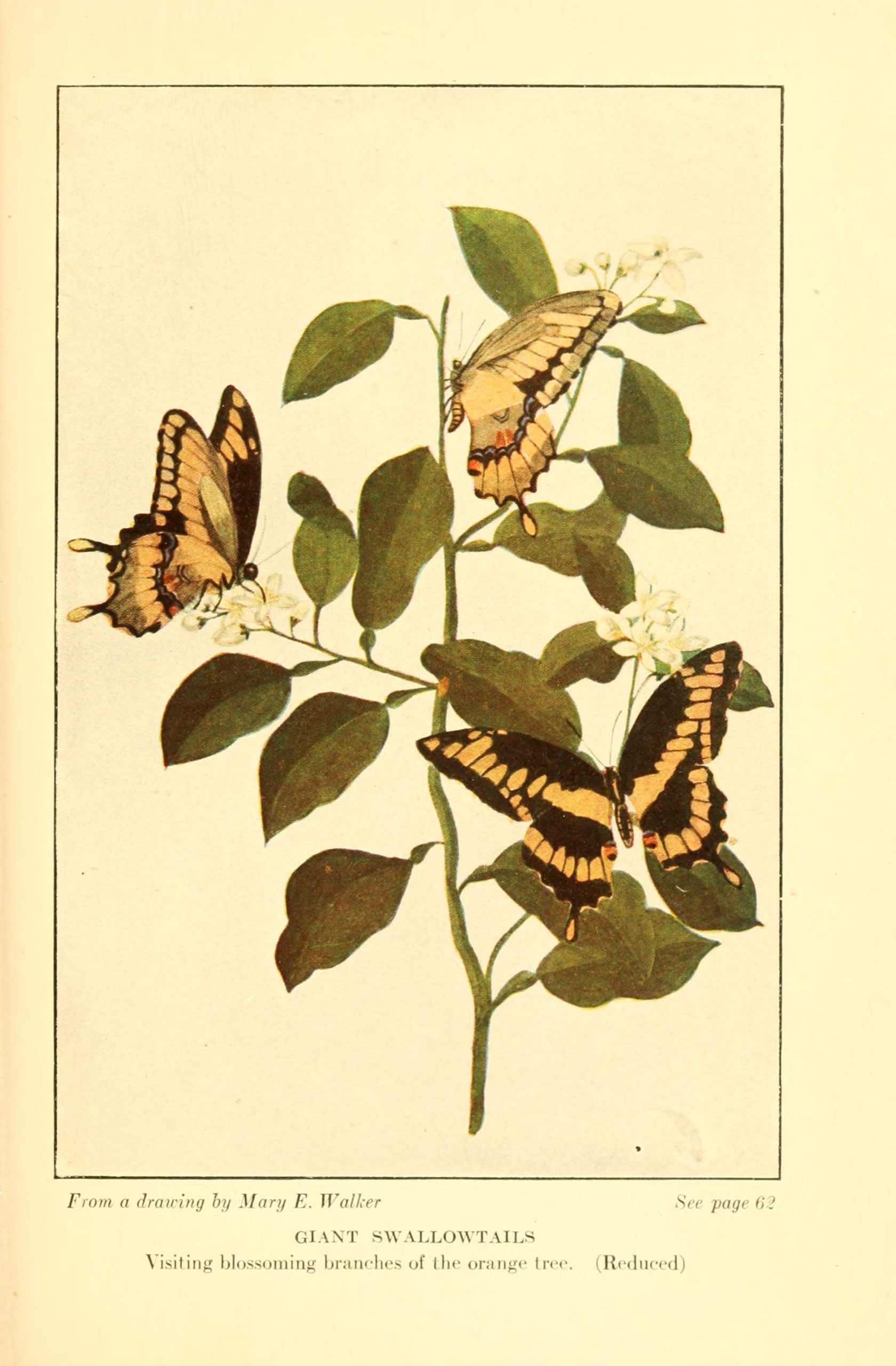
The 99 Percent include insects such as and bees and butterflies. Butterflies sure are pretty to have around, plus they help pollinate flowers. The 99 Percenters also include the gall insects that I discussed earlier. Yes the gall insects disturb the plants they live on, but they do tolerable harm. They would be silly indeed to destroy the very plants they need for life.

There are a number of good bugs that you will want to invite into your yard and garden, but we will look at 6 groups today.
Insect Friends
Since this is a gardening site, let’s look as some of the 99 Percenters that will help rid us of the less desirable 1 Percenters. What I find interesting is that in many cases we want the hungry baby bugs (larvae), not the adults. The larvae are often the carnivores, while the adults often eat nothing at all, or sometimes are pollinators.

Ladybugs
Ladybugs (called ladybirds across the pond) are among the most visible and well-known of all the beneficial insects. Did you also know that there are over 500 different species of ladybugs in North America alone? The adults tend to be orange to red, with no spots to many brown or black spots on their wing covers.

Ladybug larvae look somewhat like hairy little caterpillars. They stalk around on leaves, eating over their weight in bad bugs every day. They love to snarf up aphids, and also enjoy a breakfast of insect eggs.

Technically ladybugs aren’t really “bugs.” Ladybugs belong to the order Coleoptera, commonly called beetles. The order is recognized by having hard wing covers. Entomologists prefer the names ladybird beetles or lady beetles to avoid confusion with true bugs, Hemiptera, a group that has no hard wing covers.

Hoverflies
If it looks like a bee, and sounds like a bee, it must be a bee, right? Not if it is a syrphid or hoverfly! Also called flower flies, these black and yellow bee mimics are great for the garden. While the adults pollinate flowers, their babies (larvae) are the ones you want to have around. Syrphid larvae are legless green or gray maggots that feed on aphids and other soft body plant pests.

To tell if it is a bee or a fly, count the number of wings. Flies are in the order Diptera, meaning “two wings,” while four-winged bees and wasps are in the Hymenoptera, the wasp-waisted order. Fly eyes are also different, being flat at the back instead of rounded.

Lacewings
Lacewing larvae are the true heroes, or maybe that’s just gluttons. Looking sort of like a little caterpillar with a large pair of wickedly hooked jaws projecting from the front of the head. They are pest killers on the prowl. They feed voraciously on many plant pests, including caterpillars, beetle and bug larvae, and scale insects, even though their food may be several times larger than they are.

The adult lacewings pollinate any number of small shallow flowers, like cilantro or chamomile, and eat a few pests while they are at it. Here in the Southwest, lacewings are not always green. There are brown lacewings that look sort of like a giant mosquito. Don’t kill the lacewings!

Wasps
Many wasps are good wasps, unless you are an insect that is. Braconid and Ichneumid wasps have a life story straight out of science fiction. Or maybe its the other way around, fiction taken from true life.
Basically the wasp mothers find nice juicy adult insects and lay their eggs on them. The larvae hatch, burrow into the insect, and slowly eat it alive from the inside. They eat muscle tissues first, immobilizing their food, and leave the vital organs for dessert.

When they are not looking for insects to support their young, adult parasitic wasps feed on nectar and pollen. You may occasionally find them feeding at hummingbird feeders. There are well over a thousand species of parasitic wasps, each of which attacks a specific kind of host insect. Or spiders even, like the tarantula hawk. Just took a video of one and will get it up on my YouTube channel soon.

Ant Lions
Ant lions (in the Myrmeleontidae) are another insect that have found their way into science fiction. The larvae dig a cone shaped pit in the dirt and wait for an unwary ant to walk near. Then they throw grains of sand at the hapless ant or other small insect until it loses its footing and tumbles into their cone shaped trap. Lunge. Chomp. The ant is history.
Remember the creature in the pit in “Return of the Jedi”? Called the sarlacc (plural sarlacci), they bear a haunting resemblance to ant lions.
Adult ant lions look like large mosquitoes just as the lacewings do, and are reported visiting flowers.
By the way, ants are a wonderful part of the garden ecosystem. I discuss this more fully in Ants Are Awesome.

Dragonflies and Damselflies
Both dragonflies and damsel flies eat bugs as larvae and as adults. When resting, dragonflies hold their wings flat and away from the body, while damselflies hold their wings folded, along or above the abdomen. Dragonflies are agile fliers, while damselflies have a weaker, fluttery flight. They fly to catch their prey and will scoop up and eat mosquitoes and other flying pests.

These predatory insects might only live in your garden if you have a nice detritus filled garden pond. Their larvae (called nymphs or naiads) live in the rotting mucky debris at the bottom of the pond and feed on other water bugs – such as baby mosquitoes. In some species, the nymphal stage lasts up to five years, and the adult stage may be as long as 10 weeks, but most species have an adult lifespan of five weeks or less. Here’s a look at my water garden (used to grow water loving herbs) on my YouTube channel. I also post it often on my TikTok videos.
 Dragonflies have been popular subjects in art going back to cave paintings. In Japan they are considered symbols of courage, strength, and happiness, but in European folklore they are considered sinister.
Mantids
Mantids is the general name for the group that includes praying mantis and stick bugs. These insects eat bugs as adults. They wait for, or even stalk down their prey, seize it, and devour it with their sharp saw-like jaws.

Mantids have “incomplete metamorphosis” meaning that they don’t have a larval form. They just hatch out as smaller versions of themselves and grow larger by shedding their entire exoskeleton when the time is right.
Mantid egg cases look like miniature volcanic mountain ranges, laid on twigs or even on walls in fall. The young emerge, hungry for bugs, months later. In my garden this is in February or March.

And More
There is simply not enough space today to discuss the many other predatory insects such as owlflies, snakeflies, mengieds, halictophagids, assassin flies, elenchids, scorpionflies, hangingflies, figitids, ibalids,,,, and, well, you get the idea.
And what about spiders? Not in this post! They are Arachnidia and have 8 legs whereas bugs are Insecta which have 6 legs.

How to Get Good Bugs
There are a large number of insect predators on insect pests out there. To get the good bugs into your yard, the first step is to not apply any pesticides at all. Not even “natural” pesticides. These insects are the natural pesticides.
First step, you have to have enough food around to feed the bug eaters. You need to let the “bad bug” population build up a little, and then the “good bug” predators will show up to eat them. Ecology shows us that there are cycles and it is a constantly shifting balance.
Part two. Since many of the adult forms of the insect predators feed on pollen or nectar, provide food for them. While hummingbirds like long tubular flowers, smaller shallow flowers are preferred by these small bugs.

Consider any of these flowers: sweet alyssum, chamomile, dill, fennel, cilantro, lavender, moss rose, garlic chives, and yarrow are all recommended nectar plants for insect predators. Since some of these are herbs, they can also be food plants for you.
Insect predators have also been found feeding on penstemmon, autumn sage, sunflower, onion, lily, daisy, zinnia, verbena, yucca, and lantana. I find Syrphids on my Arizona grape ivy (Cissus trifoliata) all the time.
You just need to . . .
Plant It and They Will Come
Don’t run out and buy the ladybugs or preying mantis. Unless you have massive amounts of food for the predators to eat, they will leave your yard in search of food and may die of starvation in the urban Southwest.
It does take some time for the good guys to find you. (Are you of the generation, that will recall the line, “Have patience, Grasshopper”) With patience and willingness to have a few insects around, your yard can become a rich and extensive natural biosphere of life.
More About Insects Every Month
The Month By Month Guide offers tips for your landscape, including the animals that live there in every month of the year. I have a few copies left and am offering them to you – my loyal readers. When you buy from me you get a signed copy!
From the review:
“A great reference book is key to successful gardening in the region where you live. Arizona, Nevada & New Mexico Month-by-Month Gardening takes the guesswork out of gardening for anyone residing in the Southwest. With this book, you’ll know what to do each month to enjoy a thriving garden all year, from January to December. Chronologically organized, this guide is full of critical gardening when-to and how-to advice, along with illustrated step-by-step instructions.
The book’s author is Dr. Jacqueline Soule, a Tucson-based gardening expert. She knows this arid region inside and out, and she’s written several articles and books packed with her gardening advice. Arizona, Nevada & New Mexico Month-by-Month Gardening showcases Soule’s expertise in one easy-to-read guide.”
Profits from the sale of this book go to the Horticulture Therapy non-profit Tierra del Sol Institute. Recent price increase, due to the US Postal Service price increase in July 2024. It is now $30.
I’m Here to Help
Be sure to ask questions if you have them! I do all this writing and blogging and posting on social media so that you will succeed with your garden goals!
Thanks for your visit today.
Jacqueline

This is great. I enjoyed reading. Thank you!