

What a summer! As I compile this August list of gardening tasks, we have had either no rain at all – or too much!
Summer Rains
Hard to think too much in the desert but that sure has happened in our corner of the Southwest. Rain that came so hard, and so much of it, that our carefully sculpted passive rainwater harvest system was overwhelmed and washed away in parts.
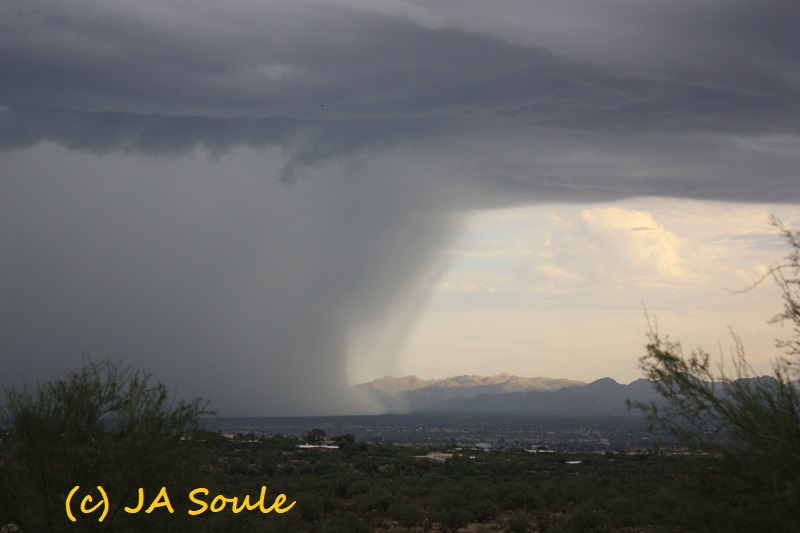
Meanwhile, I was in Plainfield, Vermont for their July 11 flood that swept away homes, bridges, roads, and sadly, a number of household pets. It also filled basements with water and muck, and roadways with muck, storm wrack, downed trees, and even boulders (not to mention things like freezers and sofas from destroyed homes). People were warned to not entirely pump the water out of their basements because the pressure of the super moist earth surrounding the walls of their basements could cause collapse of those walls.
Water is a force to be reckoned with indeed. It can be a mighty and powerful force. We would do well to remember that. Water, Air, Fire, and Earth. In one sense, those ancient elements can rule our gardening world.

Summer Winds
The winds that often accompany the summer storms are also a force to be reckoned with. Even a properly irrigated and properly pruned tree – one with both strong anchoring roots and an excellent branch and canopy structure – can be damaged when twisting winds arrive in micro-burst strength. This has been seen in a number of locations across the Southwest. Improperly pruned trees, and those with poor root structure, generally do not stand a chance. Do not “lion tail” your trees.
After a July of story chaos, we are now facing August – perhaps the toughest month of all on Southwest plants.

August Tasks
Plant
August is the last good chance to plant cacti, mesquite trees, new Bermudagrass lawns, palms, and even young citrus. These plants with tropical genes need ample time get their roots down into the soil during this warm time and well before first frost. There are other fruits with tropical genes that can be planted with care now, like pineapple guava, bananas, and avocado.

Fertilizer
In all elevations except Low Desert, you can fertilize lawns, palms, flowers, vegetables, and non-legume landscape plants, during August. Nut crops can get one last dose of blooming fertilizer. Wait until Labor Day to fertilize citrus.
After fertilizer on any fruit or nut trees, be sure to give them ample water. Nut crops, all fruits, and especially citrus trees – water widely – well away from the trunk. Water deeply to ensure a good crop. Avoid shallow daily watering. Nut crops especially will benefit from August watering. More about Watering.
General Care

Walk your fence-line or walls. Check for spots where hungry wildlife may get in. Gates are especially an issue. If you discover a snake in your yard, it is because you have mice, packrats, or other similar food the snake is tracking with its very sensitive tongue (it’s how they “smell” their prey).
If you have lawn, sharpen mower blades. Yes, again. Hurts the grass plants of your lawn less when you mow with nice sharp blades.
Prune Palms

Finally – August is the one month when you can prune your palms without fear of the palm borers finding tasty palm hearts to eat. Since it is still a blazingly hot month, make sure the workers leave ALL green leaves, yes, even the ones pointed down, to shade the part of the trunk with the tender palm heart inside. (More on palm care – here)
If you can, watch you palms for a while before calling the trimming crew. Insect-eating orioles often nest up in under those shady leaves, and their young may not have left the nest yet.
Look for Chlorosis – Yellow Leaves
July rains often bring August chlorosis. Plants with paling, often yellow, leaves but with green veins have chlorosis. Covered chlorosis – here. I would cover the topic again, right here, right now – but the AI-bots would downgrade me from covering the topic again. I am not too happy to have you link away – even if it is to something else that I wrote.
Tasks After mid-August
Vegetables
Check your Three Sisters garden. Corn and squash may be ripe, as may be the beans. Harvest any ripe tepary beans – especially if you grow a wild type like I do. Those break open and scatter the beans very quickly. The varieties that have been cultivated for generations are a tad less likely to scatter.

Consider cooking with squash blossoms. Harvested properly, you can eat the blooms and still enjoy the squash. (My video on cooking summer blooms on YouTube.)
Plant an autumn vegetable garden with pumpkins, squash, zucchini, bush beans, and robust seedlings of the deadly nightshades (if you can eat them): tomato, pepper, tomatillo, and eggplant.
Cut back any over-summered tomato plants. This will encourage new growth and (one hopes) more fruit this fall. Do check for the sphinx moth larvae on your nightshades and remove them. It is best to put them on the trap crops you are growing for them in the alley or in vacant lots. Spinx moths will pollinate all manner of desert natives. And non-native plants too, like lantana. Another common name for sphinx moth? Tomato horn worm.

Flowers
Iris can be and divided and transplanted in late August or September in all elevations. More about iris on my YouTube.
Some of the fall blooming perennial plants are getting ready to bloom, so be sure you don’t prune them. The Texas rangers (also called rain sages) often bloom summer and into October if conditions are right. Don’t let any landscape crews near them with their clippers – so you and pollinators can enjoy the flowers!
Deadhead (remove spent flowers of) any summer flowers you may be growing so they spend energy making more flowers instead of seeds.

I’m Here to Help
Be sure to ask questions if you have them! I do all this writing and blogging and posting on social media so that you will succeed with your garden goals!
Thanks for your visit today.
Jacqueline
Legal Notes
© Article copyright Jacqueline A. Soule // Gardening With Soule. All rights reserved. You must ask permission to republish an entire blog post or article. Okay to use a short excerpt but you must give proper credit. You must include a link back to the original post on our site. No stealing photos.


Be the first to reply