

So many of my articles on this site are about using various native plants, and why you should do so. This article is in the nature of a “round up” because those native plant articles are scattered across pages and pages of topic.
cover image above is a native milkweed vine, Sarcostemma hirtellum, image courtesy S. Matson.
Overview of “Native”
Just what do I mean by native? I discussed this in Native, Non-native, and Invasive Plants. In that article I point out that if we want to provide native habitat for birds and pollinators – yes, even in the city – we need to plant the native plants that they know and love.

One thing I did not address in that article is cultivars of native plants, and why you should not plant them. Nor am I going to here (much). Just know that when it comes to creating habitat for the native birds, native bees, and even native butterflies, these animals have demonstrated, in every study done so far, that they prefer straight natives that are not cultivated for “seedless,” nor the ones cultivated for “reduced height,” and even not the ones for “brighter flowers.” They prefer to visit the natives that are just like the ones found in the wild.

Specific Native Plants
These are specific native plants that I have covered in these pages (alphabetically):

acacia -part I
aloysia – attractive and tasty too
autumn sage – it loves the autumn
brittlebush – it’s beautiful!
daisies – April birth month flower
desert broom – blamed all the time but blameless when it comes to allergies
desert goji – relative of the Chinese fruit
hopbush – be sure to get the one with native genes
lavenders – including one native species
lysiloma – a feathery native plant
mistletoe – there are parts I & II
oaks, acorn harvest on Savor the Southwest
oaks, evergreen
oak trees for your yard
passionflower – vine with beautiful flowers
poppies – native species for where you live in the Southwest
zinnia, desert – the desert variety
Native Plants by Growth Habits and Landscape Uses

autumn color – many choices
bird attracting plants – native birds prefer these
cactus flowers – so many!
fragrant plants for the desert garden
groundcovers – low water alternative to lawn
moon garden – in 2 parts – natives often flower at night
perennials are perfect for pollinators
spring wildflowers
tea from plants – seven plants to grow and have tea
trees for fast shade
vines – great for small spaces
Specific Native Plants on my YouTube Channel
The interweb AI bots were all grumpy if paragraphs are too long, so I have divided this category out for your edification.
Arizona grape ivy – handy vine
brittlebush – love the flowers
Gooding’s verbena – pretty groundcover 
jojoba – also called goat nut
lady slipper euphorbia – hummingbirds adore it
milkweed vine – vine for monarch butterflies
ocotillo – hummingbird attractors
palo verde, blue – just that species so far
pensetmon, Parry’s pink
queen’s wreath – vine that loves summer heat
Native Plants Summation
Having compiled this, I can see that I do need to compose a few more article on specific native plants for you all to grow. Part of my issue is that I don’t want to get you readers all hyped up about a cool plant that you then can’t find in your local nurseries. I do try to write about ones that are easy to grow from seed, or that can be easily found fro purchase.

I have been writing about and talking to people about native plants for years. Sadly there have been a cycle of growth and shrinkage in the industry. Now it is almost as hard to find purely native plants today as it was all those decades ago. Almost all the little “backyard growers” have been shoved out of business, and the giant growers want to only grow what is easy, fast, automated, and will make them ample money. I get it. I am not happy about it, but I get it.

How You Can Help Native Plants
When you see a native plant for $24.99 you need to consider the time and effort invested in that plant. Time to go out and collect seed. Time and soil and water and space on the bench or in the greenhouse getting those tiny seeds to grow, then potting them into the next size pot, and then into a one gallon pot, creating a marketable size. You may be looking at three years work in that one pot. Are you working for 20 cents an hour? Many of those little growers and nurseries are. Come to think of it, so am I as a gardening writer.
Some of us do this job for love of plants. It’s certainly not for the money.
Focus on Native Butterfly Plants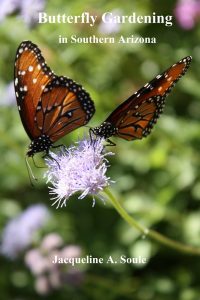
The Butterfly Gardening Guide offers tips for attracting butterflies to your yard, plus a guide to close to 100 plants to attract them.
This note from a purchaser: “Highly recommend this book! I bought one after she gave a talk on this topic at our library. My spouse has appropriated it and takes it to the nursery when deciding which new plants to add to our yard.”
Profits from the sale of this book go to the Horticulture Therapy non-profit Tierra del Sol Institute.
Legal
© Article copyright Jacqueline A. Soule. All rights reserved. You must ask permission to republish an entire blog post or article. Okay to use a short excerpt but you must give proper credit. You must include a link to the original post on our site. No stealing photos.


Be the first to reply