

Passion vine, passionflower vine, passion plant. There are many names for this vine with striking flowers and tasty fruits.
Passion Vine
Called variously passion flower, passion fruit and just plain passion vine, the genus Passiflora has over 500 species, most with edible fruit. As with virtually all cultivated garden plants, there are many named cultivated varieties to go with that “over 500 species.”
While most passion vine fruits are highly edible, the most notable is Passiflora edulis, the passion vine that bears fruit for the Hawaiian Punch drink. Passiflora edulis does best in an area of high humidity and light freezes, so not most of the Southwest.

Vines Are Great for Small Yards
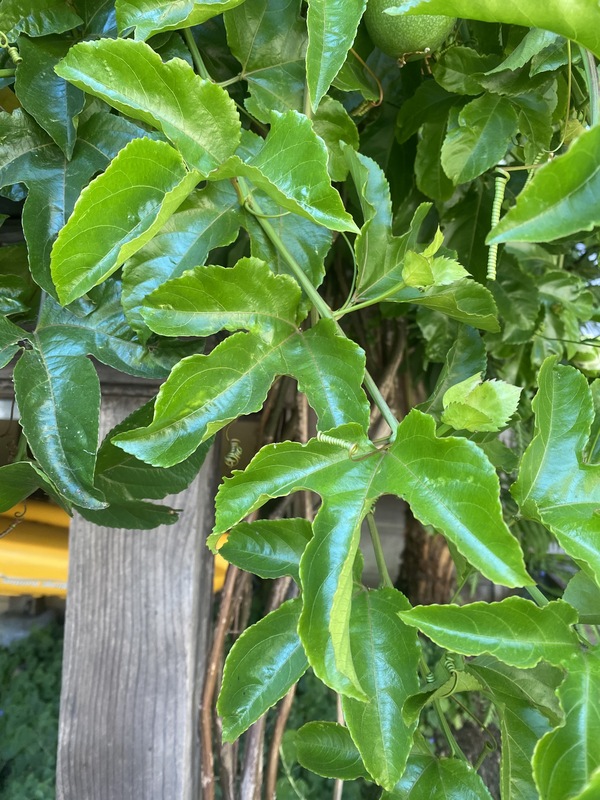
Vines, any vines, are great in the landscape. Three reasons. First of all, vines need very little root space to flourish, thus they can fit in even the smallest yard. Second, many vines have beautiful flowers, and the bloom period can last for months, offering an opportunity to fill your yard with color. Third (and in my book best of all) many vines produce food, fiber, and other usable products (grapes for wine, hops for beer, queen’s wreath for honey – you get the idea).
With so many useful vines out there, tops on my vine list for my backyard, with trouble-free growth, ample fruit production, and amazing blooms for months, not to mention butterflies galore is the passion vine, or Passiflora.
 Gorgeous Flowers
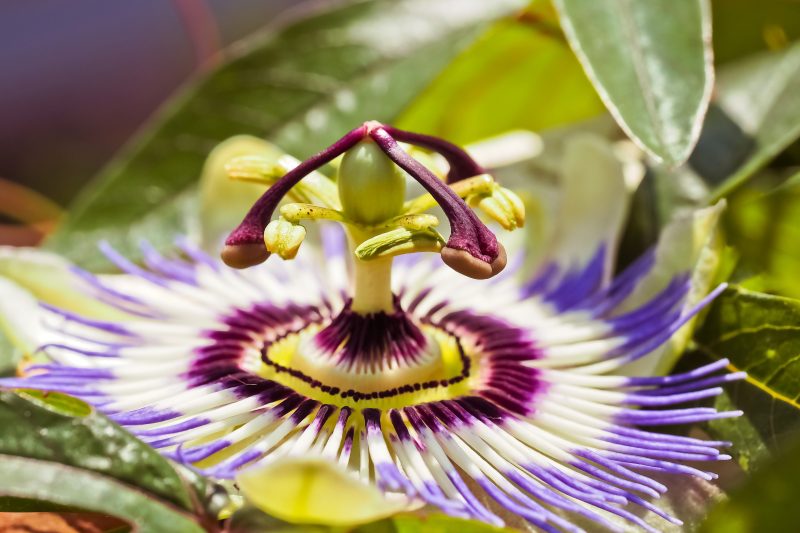
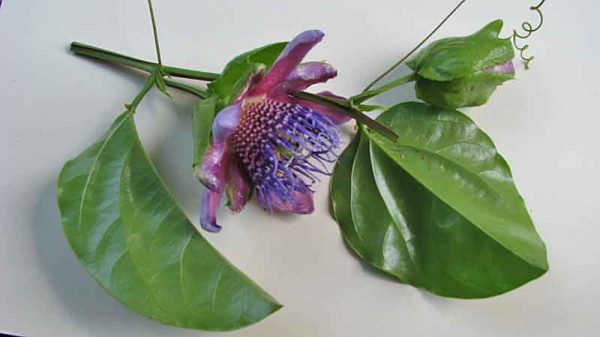
Plant this vine for the striking flowers as well as the yummy fruit. The flowers come in purples, reds and other vivid combinations of colors. Most blooms are very large, and look like some sort of alien space ship. For the Southwest, I advocate planting our native species that tolerates alkaline soils and low humidity.
Butterfly Plant
Plant this vine for the butterflies. It is the larval host plant for the gulf fritillary, also called the passion butterfly (Agraulis vanillae), a striking orange and brown butterfly. The larvae are striking as well, orange and black with spikes all over. It clearly says, “Don’t mess with me!” The voracious larvae can really eat, but so far my plants have all recovered from their depredations.
Which Passion Flower?
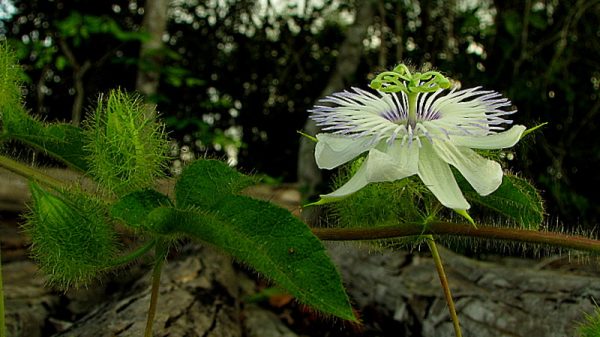
For most of the Southwest, the best passion vine to plant is the native passion vine. The name of it is a quagmire of “discussion” among botanists. Some of the discussion is quite heated and sadly not at all courteous. It is either Passiflora arizonica, or Passiflora foetida variety arizonicus, or maybe Passiflora arizonica variety foetida. You have my permission to tell anyone who tries to “correct” your nomenclature to to take a long hike off a short gangplank. Especially if they are snotty about it.
Common names for the plant include Arizona passion vine, Sonoran, Mexican, or even Baja passion vine, you get the drift. It’s also called running pop, love-in-a-mist, stinking passion flower, wild maracuja, bush passion fruit, marya-marya, and wild water lemon. This same species is said to be native to a number of warm states (California, Arizona, etc.), right down into many of the states of Mexico (Sonora, Sinaloa, Veracruz, etc.). What ever you call it, the passion flower bloom appears the same. Stunning!
Some botanists argue for the Baja plants to be in their own subspecies, and I could agree. Baja passion flower vine would be (Passiflora foetida v. longipedunculata). One reason is it is less frost tolerant, plus the larger, more showy flowers last longer into the daylight hours. It will also die back to the ground in a hard freeze. That hard freeze of 2011, I thought I lost it, but the vine resprouted. Then we moved and the javelina dug up and ate the plant that I carefully brought to the new home.
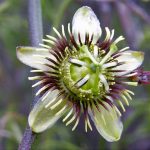
Texas Passion Vine
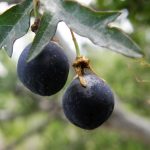
When I lived in Texas, I was delighted to discover wild Texas passion vine, also called birdwing passionflower (Passiflora tenuiloba), with fruits that turn black when ripe. The flowers are not as showy as the Arizona species, but if you live in Texas, you should consider this Texas native.
Arizona Species is Fast Growing
A fast grower, a single Passiflora foetida plant can cover 20 by 15 feet in a year. The plant is covered with bloom from March to first freeze, and the fruits ripen in four to six weeks, all throughout the summer. I planted mine under a mesquite tree and it wove handsomely up through the foliage. Passion flower will not choke the tree like some of the aggressive vines. It usually dies to the ground (in Tucson) every winter but quickly resprouts every spring, as soon as the soils warm up.
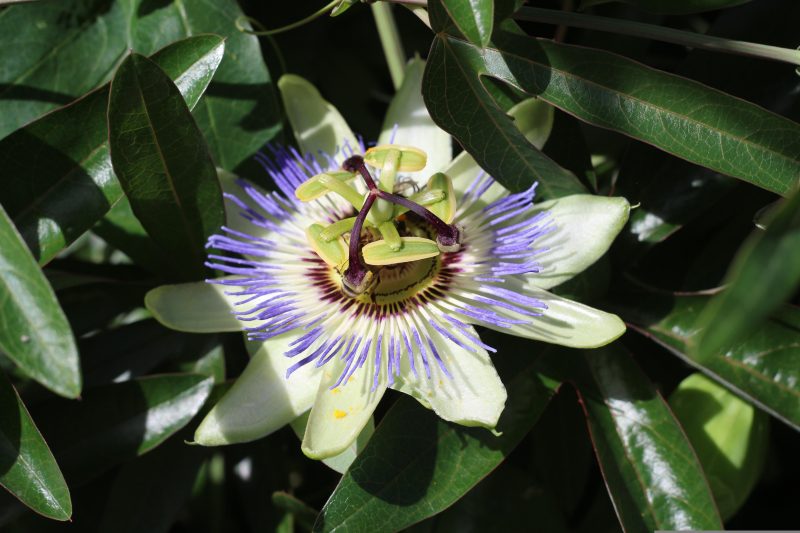
Pollinator Friendly
The plants of “Arizona passion vine” open their blooms at night, releasing a heavy, musky scent that draws in bats and the giant sphinx or hummingbird moths. Blooms last into the daylight hours, and I have seen bees as well as a wealth of butterflies – queen, monarch, and gulf fritillary butterflies all at the same time on the flowers. Let me add that those are some species fun to try to tell apart when they are flitting about!
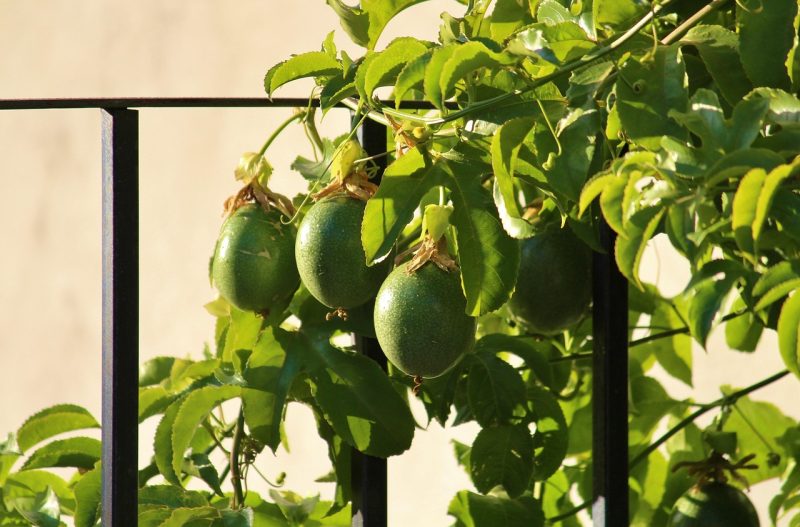
Passion Fruits
The fruits of this local species of passionflowers are all equally edible. I would suggest that plants should be on an arbor for ease of harvest. Weaving up through a tree is pretty and all – but it makes harvest hard for humans. The birds were delighted with fruits way up out of reach of the neighbor’s cats.
How to Eat the Fruit
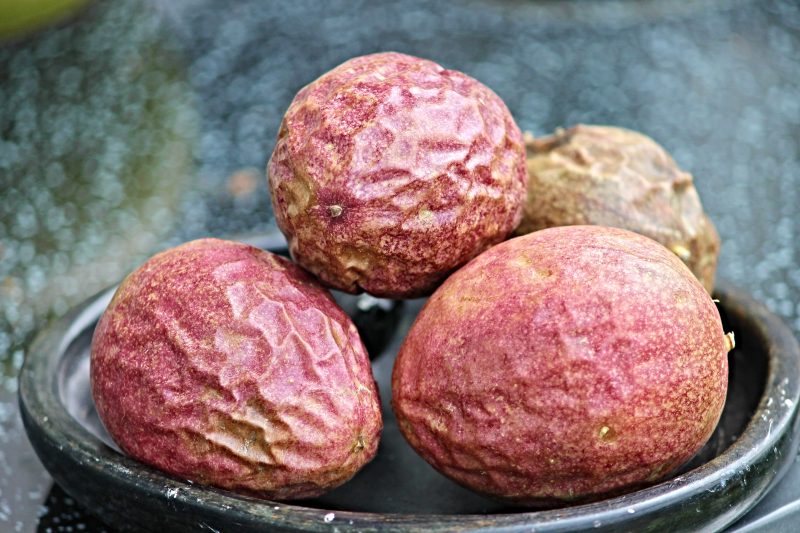
Before you simply bite into any passion fruit, you have to know that the way to eat them. The outer skin is not edible! You need to slit open the leathery outer rind and feast on the sweet flesh and seeds inside. Passion fruit can store for at least a month in the ‘fridge, but if you leave ripe fruit on the vine, the birds will get them.
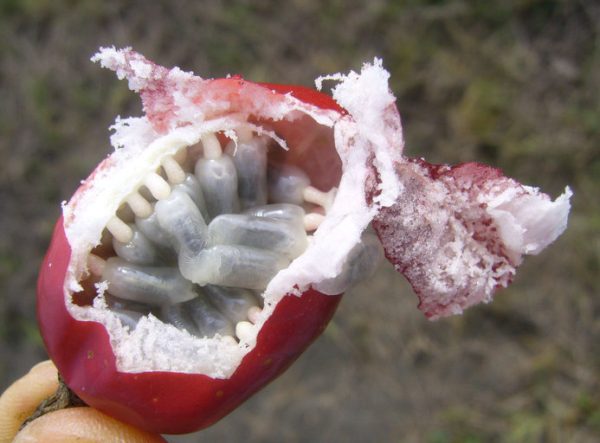
Along with the fruit, young leaves, and even stem tips are considered edible, and are served in the Philippines. I prefer to leave the leaves on the plant to photosynthesize and thus make more sugars that can be spent in producing pretty flowers and tasty fruit. There are many other tasty, warm season greens to grow and eat.
Shop Local!
I always advocate shopping at local nurseries, and I would for passion flower as well. With over 500 species, those big box stores are going to sell whatever passion vine they can get you to buy. Many passion flower vines have huge leaves and will not survive well in the low humidity of the Southwest.
More Butterfly Plants
The Butterfly Gardening Guide offers tips for attracting butterflies to your yard, plus a guide to close to 100 plants to attract them.
This note from a purchaser: “Highly recommend this book! I bought one after she gave a talk on this topic at our library. My spouse has appropriated it and takes it to the nursery when deciding which new plants to add to our yard.”
Profits from the sale of this book go to the Horticulture Therapy non-profit Tierra del Sol Institute.
Legal
© Article copyright Jacqueline A. Soule. All rights reserved. You must ask permission to republish an entire blog post or article. Okay to use a short excerpt but you must give proper credit. You must include a link to the original post on our site. No stealing photos.

Be the first to reply